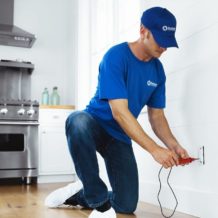
We are excited to announce that a long time Master Craftsman of our business is now the proud new owner; please join us in congratulating Earl Swader as the new owner of Handyman Connection of Blue Ash. Earl has previous business ownership already under his belt and is looking forward to continuing to serve the Blue Ash community as the proud owner.

Home Maintenance / October 16, 2026

Thermostat says 68. House says 51. It’s 11:40 p.m., the wind is doing that thing against the bedroom window, and your furnace just answered with silence.
That timing isn’t bad luck. Furnaces fail on the coldest nights because that’s when they work the hardest and when small problems finally cross the line into real ones. A weak ignitor, a dirty flame sensor, a clogged filter: none of those matter much in October. In a hard freeze, they matter a lot. If you want a professional service that day, call early, because everybody else in town is about to have the same morning you’re having.
Here’s the good news. Most no-heat calls trace back to one of four causes, and you can rule out a couple of them yourself in about ten minutes.
Your furnace is a chain of small jobs happening in sequence: pull in gas, ignite it, prove the flame is there, push air across the heat exchanger, and vent exhaust safely. Break one link and the whole thing shuts down on purpose. Modern furnaces would rather quit than run wrong, which is why “it won’t start” usually means a safety switch did its job.
Four failures cover most of what I see described by homeowners on cold mornings.
Notice what’s missing: mysterious, unfixable problems. Furnaces are predictable machines. They break in known ways.
This checklist takes about ten minutes and costs nothing. Do it in order.
One caution: if you smell gas, stop. Leave the house, and call your utility from outside. No troubleshooting is worth that risk.
This is the question that keeps furnace owners up at night, and most advice on it is either vague or pushy. Here’s a framework I use, and I’ll name it: the four-way check. Score your situation on four questions and the answer usually shows itself.
| Question | Lean repair | Lean replace |
|---|---|---|
| How old is the unit? | Under 12 years | 15 years or more |
| What’s the repair cost versus a new system? | Under a third of replacement | Half or more |
| Is this the first failure this season? | Yes | Second or third call |
| Do you plan to stay put? | Moving within two years | Staying five or more |
Three checks on the left side, repair it. Three on the right, start getting quotes before the next cold front instead of during one. Two and two? Repair now, budget for replacement within two years, because that’s exactly how these things go.
The age question matters more than people think. According to the Department of Energy, heating and cooling typically accounts for more than half of a typical home’s energy use, so an aging furnace that runs constantly is quietly draining your wallet every single month, not just on the day it dies.
Twenty minutes in October buys you a quiet January. Every fall, do these four things:
One more tip that’s saved people thousands: learn where your emergency shutoff is before you need it. Standing in a cold basement at midnight is not the moment to go hunting.
You can handle filters, thermostats, and tripped breakers. Anything past the front panel belongs to a technician, and here’s why that’s not just caution talking. Furnace diagnosis and repair are skilled trades, and the market treats them that way. The Bureau of Labor Statistics tracks heating, air conditioning, and refrigeration mechanics as a sizable occupation precisely because this work requires training and certification rather than a YouTube video and a Saturday.
Gas valves, heat exchangers, circuit boards, venting: each one can turn a small repair into a safety issue in the wrong hands. Certified technicians also carry the tools to read the error codes, test gas pressure, and check for carbon monoxide, the last of which is a genuinely life-safety issue. This is the part of the job where “I’ll figure it out” gets expensive.
Manufacturers don’t design furnaces to break. They design them to run within tolerances, and those tolerances get set through testing standards developed by engineering bodies, including work published by the National Institute of Standards and Technology. The practical takeaway: your furnace is a calibrated machine, and it responds well to maintenance and badly to neglect. There’s no mystery to it.
Most units run well for 15 to 20 years with regular maintenance. Past 15, every repair is a bet, and you should be setting money aside either way.
You can, and I would not. Space heaters cost more per degree of heat, they don’t reach pipes in exterior walls, and they’re a fire risk when used as a primary heat source. Better to fix the furnace in November than nurse frozen pipes in February.
Usually airflow or flame sensing. Check the filter first, then the flame sensor. If both look fine and it still cycles, it’s time to call.
Replace the filter this weekend, test the heat on a mild evening, and write down your furnace’s age and error code so you’re not guessing later. If the unit is already acting up, get it looked at while the calendar is boring, because repair schedules fill fast when the forecast turns. The coldest night of the year will arrive whether your furnace is ready or not, and the difference between an inconvenience and a crisis is usually about three weeks of foresight. So: what’s the age of your furnace, and do you actually know?

11115 Kenwood Rd.
Blue Ash, OH 45242

© Handyman Connection 2026 | Privacy Policy

 (513) 771-3950